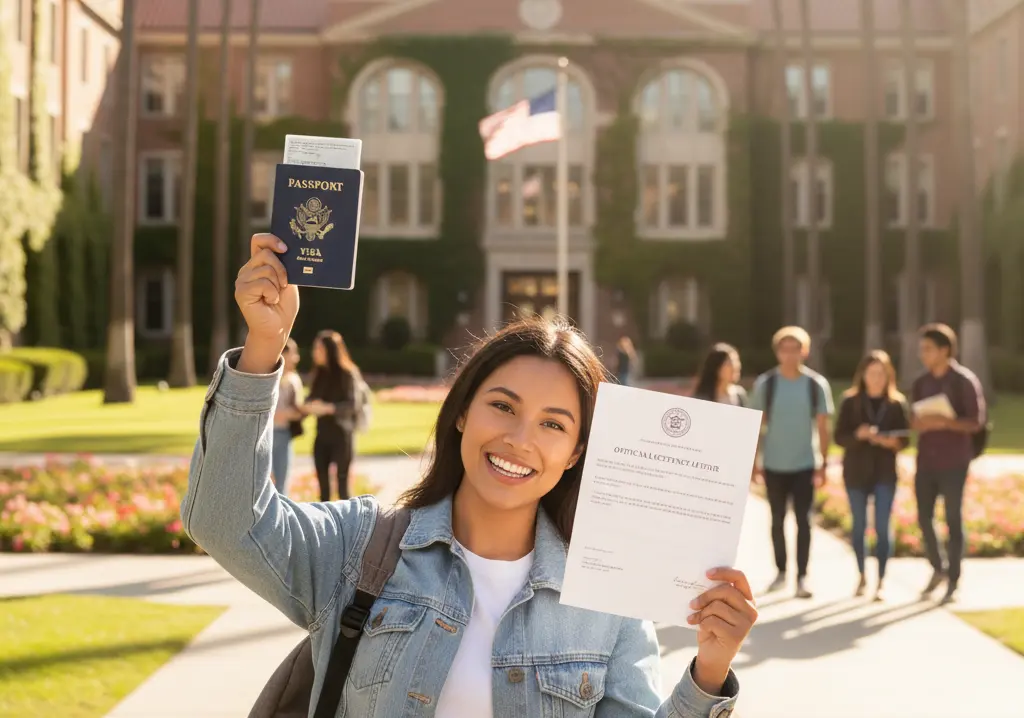
Entering the United States to study is a major milestone for international students. But the road to get there involves two important, sometimes complex steps: applying to a U.S. university and securing a student visa. Understanding both processes is key to making your American dream a reality.
Anúncios
In this friendly, detailed guide, I’ll walk you through the entire student visa and university application process for foreign students in USA in 2025. From picking your school to getting your visa interview, I’ll help you confidently navigate those crucial milestones with clarity and ease.
Why Understanding Both Processes Matters
It’s common to focus solely on university applications, but without a valid student visa, you can’t enter or stay in the U.S. for your studies. The university application determines your acceptance, while the visa determines your legal ability to live and learn in America. Both require careful planning and preparation.
Step 1: Research and Select Universities
Anúncios
Your journey starts here! You should:
- Identify universities offering your preferred program or course of study.
- Research their admission requirements for international students.
- Understand tuition fees, scholarships, and living costs.
- Consider campus culture, location, and support for foreign students.
Anúncios
Popular choices include public universities (like the University of Arizona), prestigious private schools (such as Harvard or Stanford), community colleges, and online programs.
Step 2: Understand University Admission Requirements for International Students
Requirements usually include:
- Academic transcripts equivalent to U.S. high school or prior college/university work.
- English language proficiency tests: TOEFL, IELTS, PTE, or Duolingo scores.
- Standardized test scores: SAT or ACT for undergraduate applicants (often optional).
- Letters of recommendation and personal statements/essays.
- Proof of financial support to cover tuition and living expenses during studies.
Each university publishes detailed admission criteria on their official websites — always check the latest 2025 updates.
Step 3: Prepare and Submit University Applications
- Most colleges use platforms like the Common Application, Coalition Application, or their own portals.
- Organize and upload requisite documents, making sure translations are certified and accurate.
- Pay application fees (typically $50-$100 per school), with fee waivers for eligible students.
- Meet all application deadlines, noting that early application deadlines often fall in November/December and regular deadlines in January/February.
Taking your time to craft compelling essays and gather strong recommendations can make a huge difference.
Step 4: Receive University Admission Decision and I-20 Form
Once admitted:
- You’ll receive an official acceptance letter from the university.
- The school will issue a Form I-20 (Certificate of Eligibility for Nonimmigrant Student Status). This form is essential for your visa application.
- Review the I-20 carefully to ensure your information is correct.
Step 5: Apply for the F-1 Student Visa
The F-1 visa allows you to study full-time at an accredited U.S. institution. Follow these steps:
5.1 Pay the SEVIS I-901 Fee
- This fee supports the Student and Exchange Visitor Information System (SEVIS) where your immigration records are kept. You will need the SEVIS ID from your I-20 form to pay this fee online.
5.2 Complete the DS-160 Visa Application
- Fill out the DS-160, Online Nonimmigrant Visa Application form thoroughly.
- Print the confirmation page with the barcode, which is required for your visa interview.
5.3 Schedule a Visa Interview
- Book your interview at the nearest U.S. Embassy or Consulate. Wait times vary, so book early.
- Prepare for the interview with necessary documents and clear answers to questions.
5.4 Gather Required Documents
Bring these to your interview:
- Valid passport with at least six months validity beyond your stay.
- Completed Form DS-160 confirmation.
- Payment receipt for visa application and SEVIS fee.
- Form I-20 issued by your university.
- University admission letter.
- Proof of financial support for tuition and living expenses.
- Academic transcripts and test scores.
- Ties to your home country proving your intention to return after studies.
Step 6: Attend Your Visa Interview
- Be honest and confident while answering questions about your study plans, financial situation, and post-study goals.
- The consular officer will assess your eligibility and issue your visa if approved.
Step 7: Prepare for Departure and Arrival in the USA
Once you receive your student visa:
- Book your flights to arrive within 30 days before your course start date.
- Arrange for health insurance (many universities require it).
- Plan your accommodation—on- or off-campus.
- Attend university orientation for international students to get acquainted with campus resources and support networks.
Tips for Success: Navigating the Student Visa and University Application Process
- Start Early: University applications and visa processes can take months. Begin researching at least a year in advance.
- Stay Organized: Keep a checklist and calendar for deadlines, documents submission, visa appointments, and payments.
- Use University Resources: Many schools offer admissions and international student support services to guide you.
- Sharpen English Skills: Strong language ability helps both your university performance and visa interview confidence.
- Prepare Financially: Visa officers carefully review your financial documents; be transparent and thorough.
- Practice Interview Questions: Know your academic goals and why you chose the US clearly.
FAQs about Student Visa and University Application for Foreign Students in USA
1. How long does the entire process take?
From application to visa approval, it can take 6 to 12 months depending on the university and embassy workload.
2. Can I work while on an F-1 student visa?
Yes, but there are restrictions. On-campus jobs and limited off-campus employment through CPT or OPT programs are allowed after approval.
3. What if my visa is denied?
You’ll receive reasons from the consular officer and may reapply once you address the concerns, but there’s no guaranteed timeline for approval.
4. Do universities help with the visa process?
Most universities have international student offices that provide guidance but cannot guarantee visa approval.
5. What happens if I change universities?
You need to update your SEVIS record and get a new I-20 form before enrolling at another institution.
Conclusion
Understanding the student visa and university application process for foreign students in USA is the first big step toward your academic adventure abroad. From researching universities to visa appointments, each stage demands preparation, attention, and patience. But with persistence, you’ll be walking on campus before you know it.