Hey there, fellow aviation enthusiasts and industry professionals!
If you’re even a little bit invested in the world of air travel, you know just how complex and fast-changing things can get—especially when it comes to insurance. With 2025 already flying by, the conversation around the top challenges facing aviation insurance in 2025 is more important than ever. In this article, I’ll break down what’s really happening behind the scenes, highlight the biggest pain points in the aviation insurance market, and share some expert advice on how to navigate this turbulent airspace. Whether you’re a pilot, airline manager, or insurance buff, you’re in the right place.
The Big Picture: Why Is Aviation Insurance Facing So Many Challenges?
Let’s set the stage. The global aviation sector is bouncing back post-pandemic, but insurance isn’t getting any easier. In fact, from economic volatility to political drama, the top challenges facing aviation insurance in 2025 are stacking up fast. Here are just a few reasons why the path ahead looks tricky:
- Political unrest and unresolved conflicts are sending shockwaves through the insurance market.
- Repair and claims costs are skyrocketing due to inflation.
- Old and new risks—from cyber incidents to climate change—are forcing insurers to rewrite the rulebook.
- Supply chain headaches:
Sound familiar? Let’s get into the details.
Geopolitical Risks Make the Market Unpredictable
One of the most-talked-about issues is the Russia/Ukraine conflict. Why? Because it led to the seizure of hundreds of leased airplanes, sparking billion-dollar lawsuits and a wave of insurer anxiety.
- Ongoing litigation could massively impact reinsurers, possibly reducing insurance capacity and raising prices across the board.
- The final outcome is still unknown. Some in the industry are holding their breath, hoping for the best but preparing for the worst.
Impact on Aviation Insurance
If reinsurers have to pay out on seized planes, direct insurance might get harder (and pricier) to secure for airlines and lessors around the world. These ripple effects can change what protection is available, who qualifies, and at what price.
Inflation & Rising Repair/Claims Costs
If you’ve ever tried to fix a plane—or even just buy a ticket for one—you’ve seen the prices jump. In 2025, the aviation sector is dealing with record-high costs for everything from spare parts to labor.
- Attritional claims (the smaller, frequent payouts) are eating up to two-thirds of insurer premiums annually.
- A single major incident, like the Air India crash in Ahmedabad or the American Airlines-military helicopter disaster, can quickly drain reserves and force insurers to reassess their strategy.
How Inflation Makes It Worse
When claims get more expensive and premiums aren’t rising as fast, insurer margins shrink. Underwriters are getting picky, and some are even walking away from riskier deals.
Supply Chain Delays and Labor Shortages
Think two years is a long wait for aircraft parts? You’re not alone!
From new jet engines to simple replacement parts, supply chain blockages are choking the industry—especially since the pandemic.
- Shortages of qualified mechanics increase downtime and costs.
- Late aircraft deliveries and grounded fleets mean higher risk exposure for insurers.
Tip: Insurers are now rewarding airlines and operators with strong supply chain resilience and risk mitigation plans.
Cybersecurity and Climate Risk: The Twin Modern Threats
Tech is transforming aviation, but not always in good ways.
Cyber incidents have become the top risk in aviation insurance for 2025. And as climate change brings more unpredictable weather and catastrophic losses, insurers are facing brand-new challenges.
Cyber Threats
- Systemic cyber risk can ground flights worldwide.
- Gaps in coverage for cyber business interruption and property damage create new uncertainties.
Climate Change
- Increased frequency of flood, hurricanes, and severe turbulence.
- Climate risk makes underwriters rethink the locations they’re willing to cover.
High-Profile Aircraft Accidents and Catastrophic Claims
Let’s face it—everyone in aviation insurance dreads a high-profile crash. Sadly, 2025 has already witnessed several, causing industry-wide ripples.
- These catastrophic events bring multimillion-dollar claims and negative media coverage.
- Liability claims are under the microscope, especially when non-passenger fatalities occur.
- Multiple accidents in a year are especially damaging to insurance capacity and confidence.
Uncertain Reinsurance Capacity
Reinsurance: it’s what gives direct insurers the backup they need to handle big losses. But in 2025, everything—from Russian legal cases to recent accidents—could shrink available reinsurance, making it harder and pricier for everyone else.
- Major court rulings over aircraft seizures could pull capacity out of the global market.
- Lower capacity means higher prices and stricter terms for airlines, leasing firms, and operators.
Technology, Data, and Rising Expectations
The aviation insurance world wants to innovate. Predictive analytics, AI-based risk assessment, and digital claims handling are all trending in 2025. But with new tech comes new expectations:
- Insurers must process claims faster, offer more flexible coverage, and safeguard sensitive data.
- Parametric and on-demand insurance solutions are gaining popularity, especially for delay or disruption cover.
Summary Chart: Top Challenges Facing Aviation Insurance in 2025
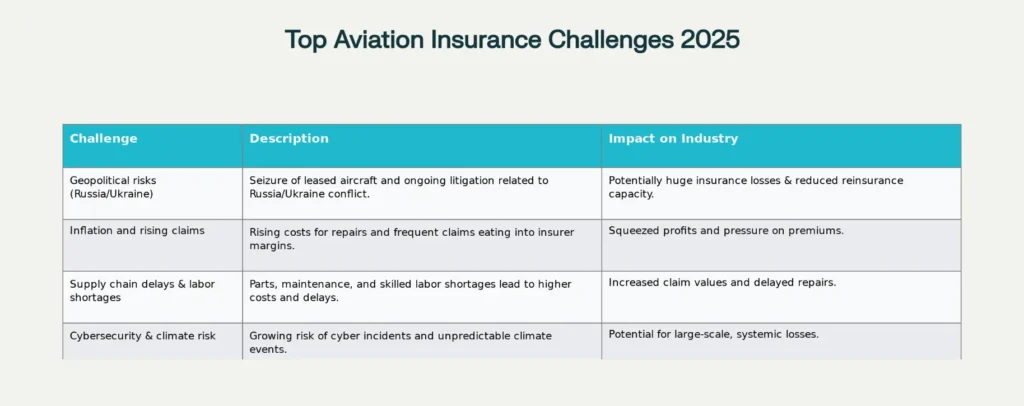
Comparison table of top challenges facing aviation insurance in 2025
Frequently Asked Questions (FAQs)
1. What is the biggest challenge for aviation insurance in 2025?
The uncertainty created by geopolitical conflicts—especially litigation over seized aircraft in Russia/Ukraine—and the resulting impact on global reinsurance capacity stands out as the most critical challenge for aviation insurance in 2025.
2. Why are aviation insurance claims so expensive now?
Rampant inflation, rising costs for labor and aircraft parts, and a surge in high-profile accidents are driving claim values higher, putting pressure on insurers’ financial reserves.
3. How is climate change impacting aviation insurance?
Insurers are seeing more unpredictable, expensive claims caused by severe weather, floods, and storms. This climate risk is making it harder to offer affordable coverage for airports and airlines in exposed regions.
4. What can airlines and operators do to manage their risk in 2025?
Strengthen risk management practices, improve supply chain resilience, invest in cybersecurity, and work with brokers who understand new market realities. Multi-year policies and innovative insurance products can help lock in rates and safeguard against sudden changes.
5. Are premiums going up in 2025?
According to recent coverage and expert commentary, some organizations predict higher premiums, mostly driven by catastrophic losses and unresolved litigation. However, market competition is still strong, so savvy buyers can often negotiate favorable rates with good risk management and loss histories.
Tweet Highlight
“Rising claims and geopolitical risks clash with fierce market competition, leaving premiums delicately balanced as the renewal season approaches. What will give first?”
— Price Forbes Airline Insurance Market Update, May 2025
Conclusion
If you’ve made it this far, you’ve got a solid grip on the top challenges facing aviation insurance in 2025. The secret sauce for success isn’t just crossing fingers and hoping for calm skies. It’s about understanding these challenges—geopolitical risk, inflation, supply chain delays, cyber and climate threats, and a changing reinsurance landscape—and working with partners who are up to date and proactive.