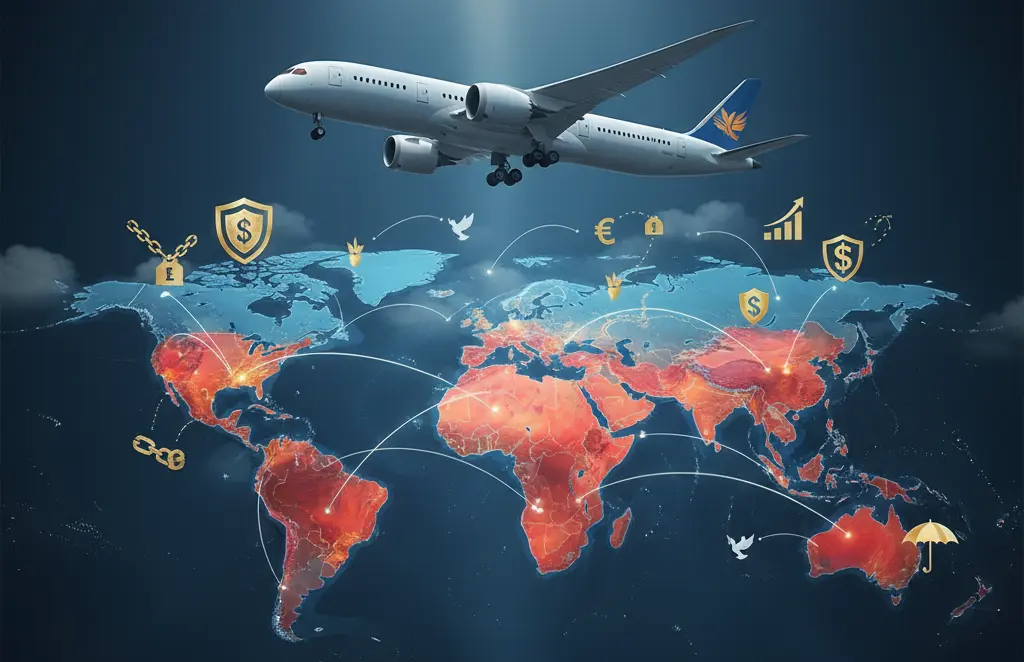
If you’ve ever wondered why aviation insurance rates suddenly skyrocket—even when airlines themselves haven’t had major accidents—geopolitical risks might be the missing piece of the puzzle. In today’s global environment, political tensions in faraway regions can bump up premiums for everyone. I’ll walk you through how these risks work, what drives cost spikes, and some surprising ways insurers and airlines fight back to keep flights safe and affordable. Let’s dig in!
What Are Geopolitical Risks in Aviation?
Geopolitical risks refer to events caused by international political tensions—think wars, sanctions, cyber-attacks, trade disputes, and even political shifts in major countries. Unlike routine operational risks, these dangers come with unpredictable consequences that ripple throughout the aviation sector, raising insurance premiums for airlines, private operators, and even air cargo carriers.
Key Types of Geopolitical Risks
- Armed Conflicts: Example: the Ukraine war led to airspace closures, aircraft seizures, and huge insurance claims.
- Sanctions: Restrictions on aircraft, spare parts, and payment systems, creating uncertainty and higher costs.
- Cyber Attacks: Targeting air navigation systems, ticketing, airport ops, or maintenance data.
- Political Instability: Sudden political changes in key aviation corridors (Middle East, Asia, Eastern Europe).
- Trade Wars: Affect supply chains, parts availability, and airline revenue.
How Geopolitical Risks Cause Rising Insurance Costs
Let me break down how geopolitical events can hit aviation insurance:
1. Increased Claims and Losses
When conflicts erupt, insurance companies see a surge in claims—think lost planes, grounded fleets, or even civilian aircraft shot down. The war in Ukraine, for example, made headlines by causing massive claims and forcing insurers to rethink their risk strategies.
2. Premium Hikes and Market Volatility
War-torn regions, unstable governments, and sanctions mean less predictability for insurers. To hedge their risks, they raise premiums and tighten terms. Sometimes, rates for airlines flying in high-conflict zones jump by 20–30%.
3. Changes in Coverage Terms
Insurance companies add exclusions, limit war risk coverage, or impose higher deductibles. Some have withdrawn entirely from ultra-high-risk regions like Ukraine or Gaza in recent years.
4. Cost Pressure from Supply Chain Disruptions
Geopolitical instability can slow global trade—delaying aircraft parts for repair by months, which drives up the value of claims and ultimately premium costs.
The Role of Technology and Data in Managing Geopolitical Risks
Now, here’s something cool: insurers are using real-time data, satellite imagery, and risk modeling tools to track geopolitical threats. Advanced platforms let them spot emerging hot zones, reroute flights, and tailor coverage, making insurance more dynamic and responsive.
Examples:
- Real-Time Risk Mapping: Tools like Insurwave’s platform let companies monitor local conflicts and adapt insurance portfolios instantly.
- Predictive Analytics: AI and data models forecast rising risks, helping insurers set fair prices—with less guesswork.
Recent Geopolitical Flashpoints Impacting Aviation Insurance (2024–2025)
- Russia–Ukraine War: Massive claims, rerouting, restricted airspace, and huge war risk premium increases.
- Israel–Gaza Conflict: Aircraft war risk premiums spiked. Some airlines faced temporary bans on flying through affected airspace.
- Asia-Pacific Tensions: Territorial disputes (Taiwan, South China Sea) led to decreased insurer appetite for regional accounts.
- Global Cyber Incidents: Sophisticated attacks on navigation and airport systems pushed demand for cyber risk endorsements.
How Airlines and Insurers Adapt
Here’s what industry insiders say about tackling these risks smartly:
Better Risk Assessment Tools
Insurers are investing in advanced risk models that factor in real-time geopolitical data. This helps them set premiums more accurately.
Portfolio Diversification
Spread risks across regions and sectors to avoid catastrophic losses from a single area. Insurers now prefer diversified portfolios instead of concentrating exposure in risky zones.
Industry Collaboration
Groups like the International Union of Aerospace Insurers (IUAI) foster data sharing, best practices, and joint contingency planning to tackle threats collectively.
Cyber Insurance Endorsements
Airlines increasingly buy cyber risk cover as navigation and operations become more digital—and more vulnerable to hacks.
Case Study: Impact of the Ukraine War on Aviation Insurance
Let’s look at a recent example: The Ukraine conflict disrupted the aviation insurance market overnight. Hundreds of planes were stranded, airspace closed, and insurers faced billions in claims.
- War risk premiums doubled or tripled for any airline flying near the conflict zone.
- Some insurers cancelled coverage, tightening the overall market.
- Airlines scrambled for new policies and alternate routes—costing millions in extra risk and operational changes.
Aviation Insurance Costs by Region (2025 Snapshot)
Here’s a quick look at current cost trends around the world:
Frequently Asked Questions (FAQs)
1. Why are aviation insurance premiums rising so fast in 2025?
Premiums are up because of global conflicts, cyber threats, and supply chain disruptions. Insurers need to buffer against big, unpredictable claims.
2. What can airlines do to lower their insurance costs?
Airlines can minimize premiums by avoiding high-risk regions, improving cybersecurity, adopting advanced risk management, and maintaining good safety records.
3. How do sanctions affect aviation insurance?
Sanctions can block access to spare parts, restrict payments, and spike operational risk—forcing insurers to raise prices or withdraw coverage entirely.
4. Are smaller aircraft or private aviation affected?
Yes! General aviation insurance is usually cheaper but still sensitive to geopolitical risks, especially if flying overseas or in politically unstable regions.
5. What’s the future outlook for aviation insurance costs?
Experts expect continued volatility, but insurers are investing in technology and collaboration to reduce sudden price swings. The industry should stabilize around 2026, barring major new geopolitical shocks.
Industry Voices and Social Media
One notable voice on this topic is Tom Hughes, Director of Underwriting at the International Underwriting Association (IUA), who recently tweeted:
“Geopolitical instability is the aviation sector’s biggest threat for the next five years. Our industry must innovate and collaborate to remain resilient.”
Conclusion & Call-to-Action
So, as we’ve seen, the world’s big political shakeups aren’t just news headlines—they hit your local skies and wallets too. If you work in or rely on aviation, understanding how geopolitical risks affect aviation insurance costs is now a must. From war zones to cyber threats, smart risk management and insurance innovation are your best bets for keeping costs in check and flights in the air.